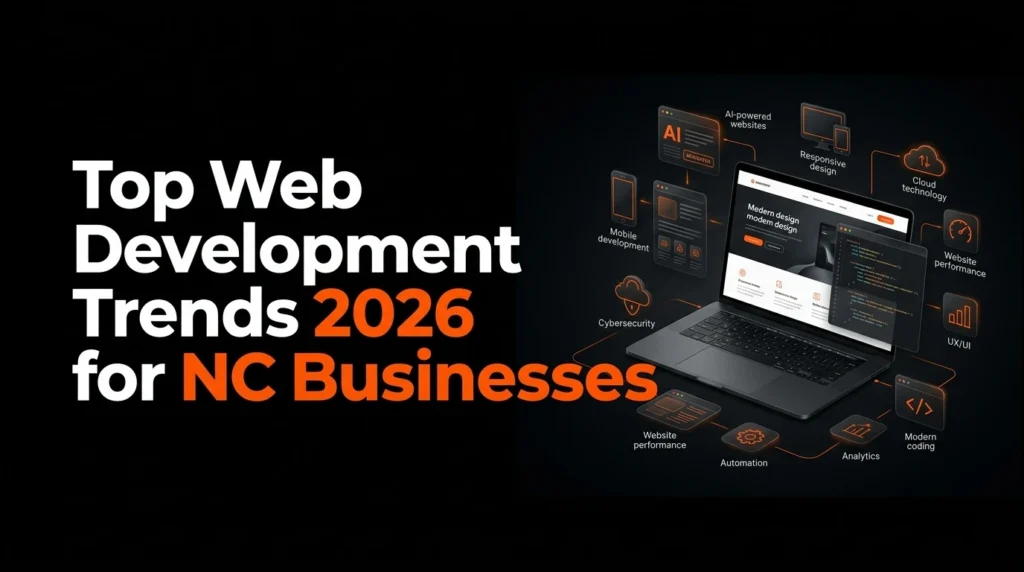
The digital marketplace across North Carolina is evolving rapidly. From the fast-scaling tech hubs of Raleigh and the Charlotte financial center to growing regional enterprises in Wilmington, Greensboro, and Winterville, a company’s website is no longer just a digital business card. It serves as the primary engine for customer acquisition, brand authority, and operational efficiency.
As customer expectations rise and search engine algorithms become more sophisticated, maintaining a competitive edge requires continuous technical adaptation. Outdated digital platforms built on heavy, legacy code structures do more than look old—they actively drain company revenue by driving up user bounce rates and damaging search visibility. To win online in modern markets, local enterprises must transition toward agile, performance-driven web architectures.
This comprehensive guide details the definitive web development NC trends shaping corporate digital strategy. It provides actionable implementation steps, technical breakdowns, and strategic insights designed to transform your website into a high-converting, scalable business asset.
1. AI-Driven Personalization and Hyper-Local UX
Artificial Intelligence has advanced far beyond basic automated text generation. Modern interface engineering heavily emphasizes dynamic, AI-driven user experiences (UX) that analyze visitor behaviors, entry sources, and geographical data to modify web content in real time. For regional brands, this shifts the focus toward hyper-local personalization.
Visitor Lands on Site
A visitor arrives on your website and begins their browsing experience.
AI Analyzes IP & Geolocation
AI identifies regional signals to understand where the visitor is located.
Interface Automatically Adapts
Regional case studies and relevant content are automatically displayed.
When a prospective client visits your page, a personalized architecture ensures the system delivers immediate, localized relevance. This hyper-targeted approach removes navigational friction, building trust before the user ever reaches out to your team.
Practical Local Applications
- Dynamic Regional Content Delivery: If a user visits your site from Charlotte, the interface can automatically highlight your Charlotte-based service portfolios, local client case studies, and regional reviews. If the next visitor hails from Wilmington, the platform shifts to showcase coastal projects.
- Localized Pricing and Service Modules: Multi-location enterprises can use geo-fencing data to present county-specific pricing structures, local service availability, or regional discount banners automatically.
- Contextual Conversational AI: Static, rule-based chatbots are being replaced by advanced natural language processing (NLP) assistants. These specialized tools understand conversational nuances, qualify local sales leads, book consultations directly into your CRM, and answer complex troubleshooting questions 24/7.
Conversion Tip: Avoid generic corporate imagery. Deploying dynamic content modules that match a user’s specific North Carolina market increases on-page engagement times and boosts conversion rates.
2. Next-Gen Performance: Server-Side Rendering (SSR) and Edge Computing
Website speed directly dictates your digital conversion rates. In a mobile-first environment, consumers expect pages to render instantly. Modern responsive layouts are merely table stakes; true performance requires optimizing the underlying asset delivery infrastructure.
To combat web latency, developers are moving processing tasks away from the client’s browser and onto decentralized global networks using Edge Computing and Server-Side Rendering (SSR) frameworks like Next.js, Remix, or Nuxt.js. Traditional websites force a visitor’s smartphone to download, unpack, and execute heavy JavaScript files before showing content. SSR eliminates this weight by pre-rendering the page on a cloud server right next to the user, delivering a lightweight, fully formed HTML document instantly.
Technical Advantages for North Carolina Brands
- Mastery of Core Web Vitals: This optimized approach targets Google’s technical evaluation metrics, specifically Largest Contentful Paint (LCP) and Interaction to Next Paint (INP). Maximizing these scores directly signals quality to search algorithms, improving organic rankings.
- Rural Network Optimization: High-speed processing ensures your platform loads flawlessly for users on limited 4G networks or spotty connections across rural eastern or western NC.
- Elastic Structural Scalability: Decentralized caching protects your infrastructure from unexpected crashes during high-traffic surges caused by seasonal local campaigns or viral media exposure.
3. Headless CMS Architectures for Omnichannel Growth
Traditional content management systems (CMS) use a monolithic architecture, meaning the backend administration dashboard and database are permanently attached to the frontend visual layout. While straightforward, this legacy system introduces performance degradation and security vulnerabilities as a corporate platform grows.
Forward-thinking enterprises are adopting headless CMS architectures, which completely separate the content repository from the visual display layer. This decoupled approach allows organizations to store content securely in a central database and distribute it via fast APIs to any front-end interface or digital channel. Migrating to a headless stack provides significant benefits in performance, security, and omnichannel scalability.
4. Voice Search Optimization and Conversational Semantics
As voice assistants and AI-driven search engines grow, search queries are shifting from short, fragmented keywords to complex, conversational sentences. For North Carolina businesses, adapting to this trend requires moving toward conversational data modeling by deploying JSON-LD schema markup, building informational content hubs that answer direct questions early, and creating dedicated FAQ sections.
5. Web Accessibility (WCAG 3.0) and Inclusive Design
Digital accessibility is both an operational necessity and a regulatory standard. Ensuring compliance with Web Content Accessibility Guidelines (WCAG) expands your potential market while mitigating legal risks. Key upgrades include full keyboard navigation support, high-contrast color frameworks, and descriptive semantic image alt text.
6. Sustainable Development and Green Web Design
Sustainable web design focuses on minimizing environmental impact by reducing digital data weight and server demands. Tactics include media refactoring (using modern formats like .webp and automated lazy loading), code cleanliness audits, and migrating to eco-friendly hosting providers powered by renewable energy.
Choosing the Right Technical Stack for Your Growth
Selecting the proper technology framework depends on your specific operational workflows:
- Custom WordPress Builds: Ideal for content-heavy brands and mid-sized lead-generation platforms, offering scalability and intuitive publishing.
- Shopify and WooCommerce Environments: The optimal choice for e-commerce brands requiring secure checkout flows and inventory management.
- Webflow and Tailored Code Solutions: Best for visual brands needing custom front-end motion and rapid execution speeds.
Your Strategic Growth Action Plan
- Execute a Comprehensive Technical Audit: Identify performance bottlenecks and mobile errors using diagnostic tools.
- Optimize On-Page Local Relevance: Inject geographic anchors and dedicated service pages to capture regional searches.
- Partner with a Verified Regional Specialist: Collaborate with experienced professionals to ensure coding and accessibility standards are met.
Turn Your Website into an Active Growth Engine
An optimized web platform serves as a continuous compounding asset that builds trust, captures user intent, and generates high-value leads. Upgrading your infrastructure prevents outdated templates from draining your regional market share.
Frequently Asked Questions
What is the core difference between a traditional website and a headless website?
Traditional systems bind the backend to the frontend, whereas headless systems separate data storage from visual display for faster speeds and multi-channel delivery.
How do technical choices affect local SEO for NC brands?
Enhancing speeds, mobile responsiveness, and schema markup helps search crawlers verify local service areas and improve rankings.
Why is website accessibility compliance legally mandatory?
It ensures equal access for users with disabilities while protecting enterprises from legal disputes.
How often should an enterprise update its technical architecture?
A professional review every 2 to 3 years ensures compatibility with new browser engines and security standards.
Can custom web development services NC improve lead conversions?
Yes, by streamlining user paths and eliminating layout glitches to turn traffic into inquiries.